| |
 |
Built for Small to Medium size manufacturing and facilities.
Created to support unlimited number of locations. |
|
| |
Never miss a work order
Automated work order generation and dashboard
visibility assist in never missing a maintenance
requirement. Using the RFCMMS Middleware
module, you can use runtime hours as an indicator. |
Friendly for All Users
Designed and laid out so even the
novice user can navigate and enter
details into a work order that helps
increase accuracy. |
Accurate Inventory Tracking
Easy and informative inventory helps to insure you
have the parts to perform your work. Create kits
so no part gets missed when adding to a work order. |
|
| |
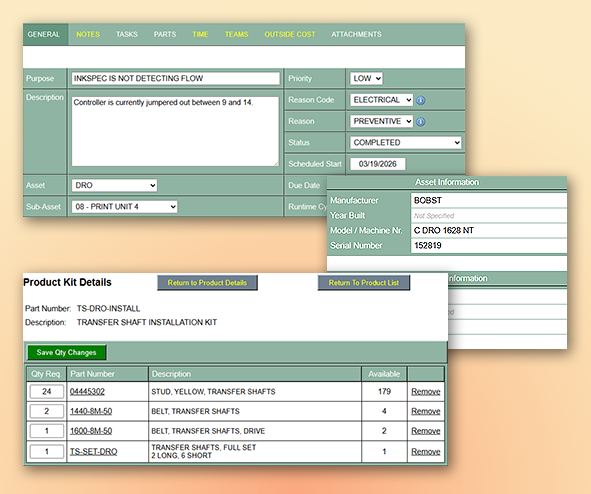
User Friendly Work Orders with Detailed Information
Capture details to assist you in finding patterns, determining what to include in CapEx, necessary products to keep in inventory and increased communication. Built-in "Tie-In Log" so cross shifts and management can see what has been happening on a daily bases.
|
 |
|
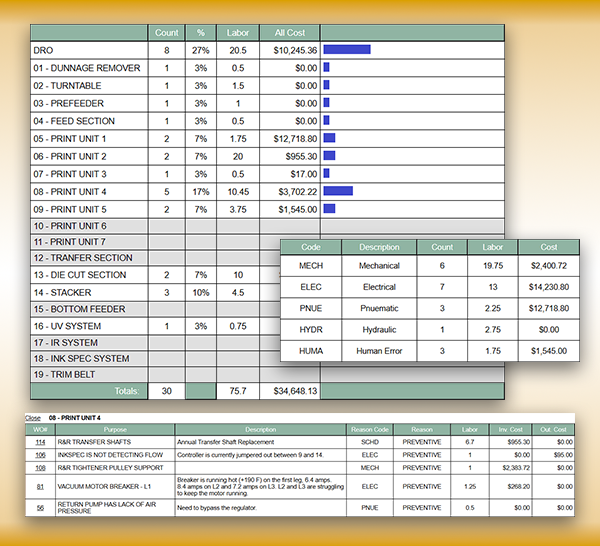 |
Data Mining for Viewing Detailed History
Our reports use straight up data and not flashy charts. These views allow you to select the rows and information to display the related information. Reports such as Work Order Activity, Asset Drilling, Monthly Completions, Base on Reason Codes, etc. |
|
| |
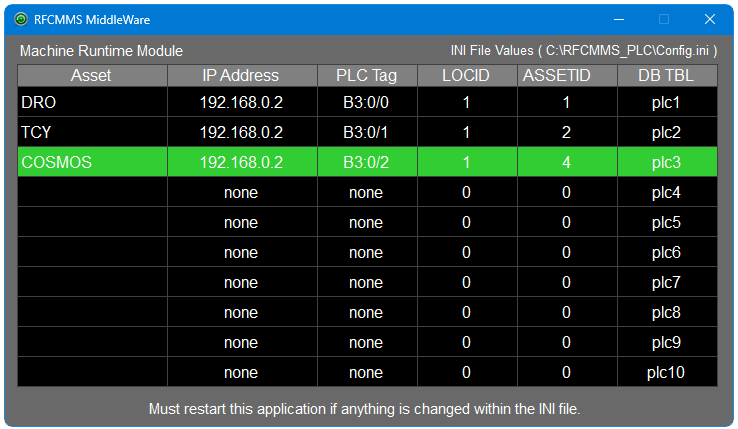
Connect to your machines and collect the Actual Runtime Hours
With the RFCMMS Middleware application, you can get the live starts and stops of your machines. To learn more about this feature, select the link to the left for more information. A report has been created to show "Starts and Stops", Total Runtime, Daily Runtime, Weekly Runtime, Average Runtime and what other machines are currently running. This report helps to make informed scheduling decisions.
Click here to view the report. |
 |
|
| |
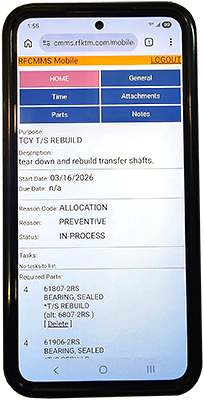 |
RFCMMS Mobile
95% of the work order features are available on the phone app. Create and close a work order, recording your labor hours, take pictures or video, make notes, look up inventory and record consumable product usage.
A great tool to be mobile. |
|
| |